Pineridge Deck Pros
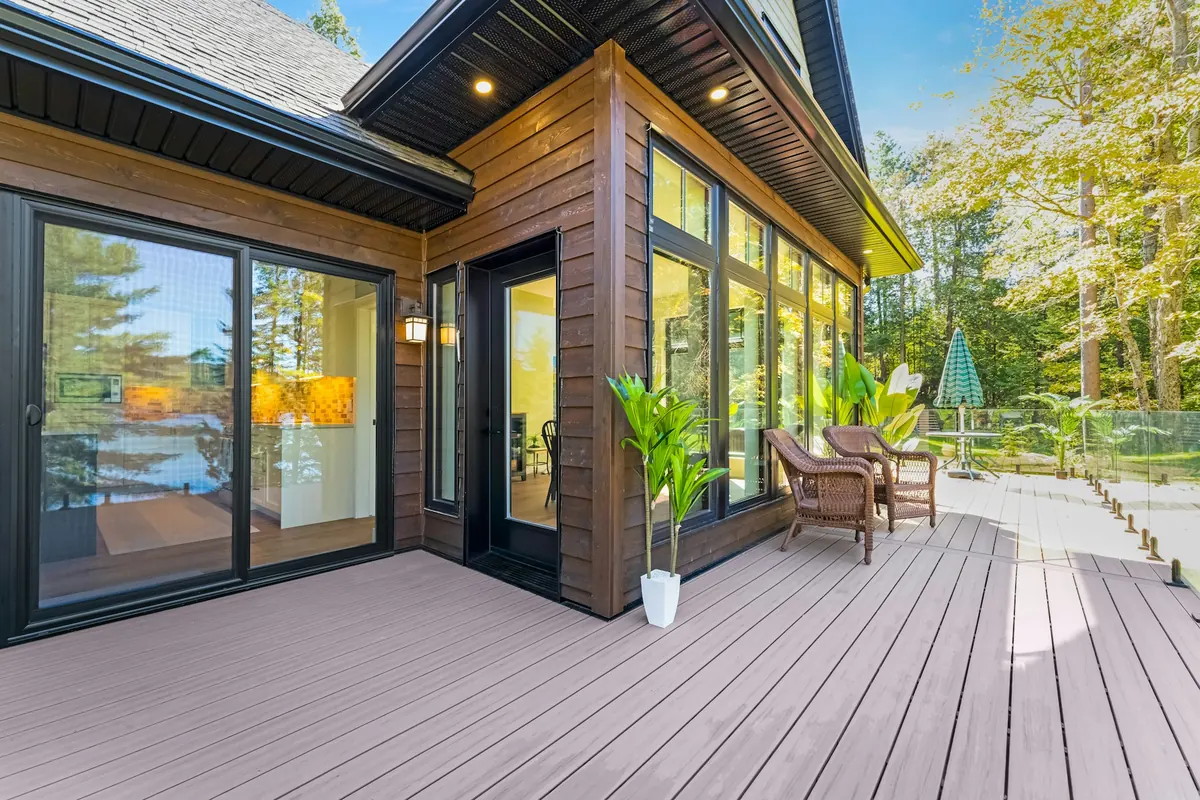
Composite deck with glass railings outside a house with wood siding and tall windows

Fort Collins, CO Materials

Composite vs Wood Deck in Colorado

Composite vs wood in Colorado comes down to paying now or paying later: wood boards cost about $3 to $9 per square foot against $6 to $13 for composite, but in Fort Collins' dry, high-altitude sun a wood deck needs sealing every year or two, and capped composite doesn't. This guide compares price, sun and heat, hail, snow care and the wildfire code, side by side.

$3 to $9 vs $6 to $13
Wood vs composite boards per sq ft, material only (Modernize, August 2026).
Every year or two
How often a wood deck needs sealing in Colorado's dry sun.
25 to 50 years
Trex limited residential warranties across its lines.

Last reviewed November 2026.

Composite vs wood deck in Colorado, side by side

Composite vs wood decking on the Front Range
Wood (treated, cedar)Composite (capped)
Boards, per sq ft (material)Pressure-treated $3 to $6; cedar $4 to $9$6 to $13 (PVC $7 to $15)
Installed deckLower half of $22 to $55 (Denver)$25 to $54 (Angi national)
UpkeepSeal every year or two in dry sunWash; no sealing
Sun and heatGrays and checks without sealer; stays coolerFades slowly; gets hot, darker colors more
HailDried-out boards split more easilyNot hail-proof; damaged boards swap out
Snow and iceShovel with care; salt can damage finishPlastic shovel only; calcium chloride or rock salt OK, rinse
Wildfire code (unincorporated Larimer)Standard wood doesn't qualify; FRT wood doesClass B or better qualifies
WarrantyNone on boardsTrex 25 to 50 years, limited residential

Sources: Modernize Deck Cost guide (Aug 12, 2026); Angi 2026 Denver and national deck cost guides; Trex FAQ; 2025 Wildfire Resiliency Code with Larimer County amendments.

Prices for both, by deck size, are on the deck cost in Fort Collins page.

Sun, altitude and dry air

Fort Collins sits at about 5,000 feet, where the sun is strong, and the air is dry most of the year. Wood that is left unsealed loses moisture fast, grays, checks and splits along the grain; pressure-treated pine also tends to twist as it dries. Sealing every year or two holds that off, and cedar stays more stable than treated pine. Capped composite has a plastic shell that doesn't need sealing, and its fade coverage runs with Trex's limited warranties.

Heat underfoot

The trade-off with composite is heat. Trex says plainly that its boards get hot in direct sun on hot days, and darker colors more so. On a west-facing deck that is the strongest argument for a light color, for shade from a pergola, or for wood.
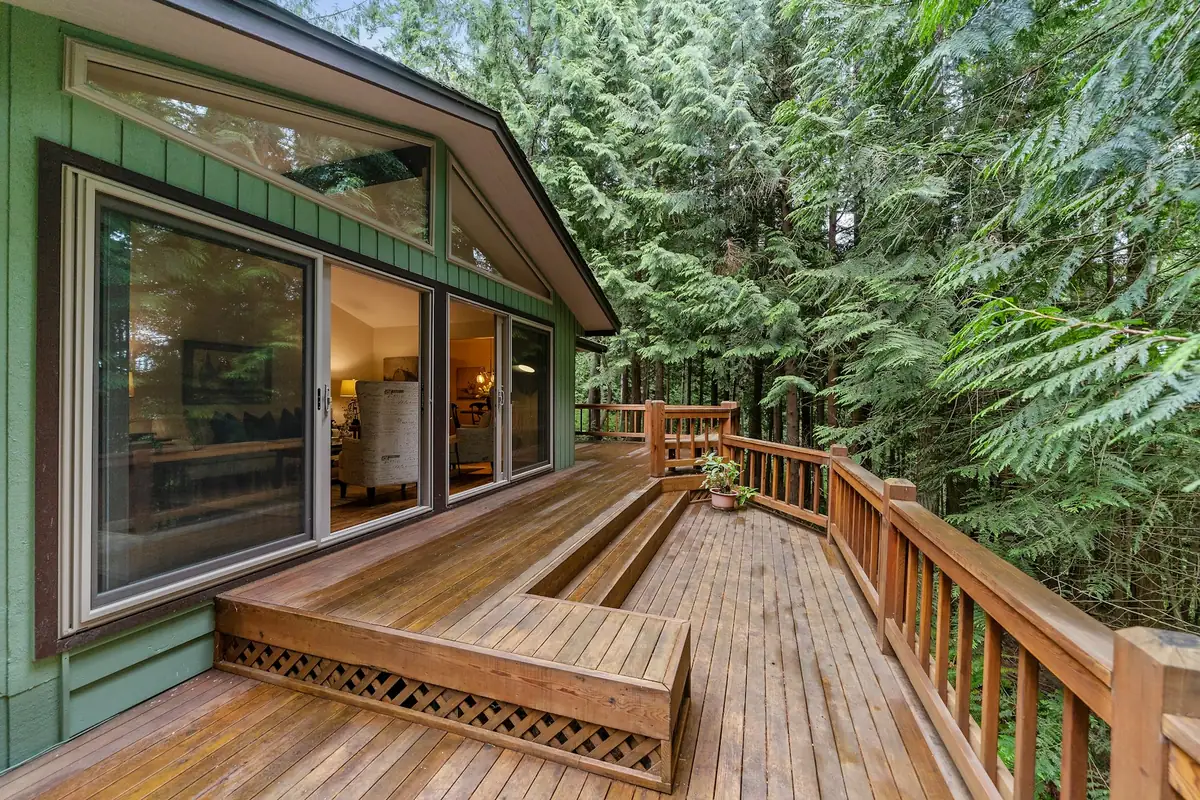
Cedar deck and railing with built-in benches outside a green house with sliding doors, evergreens beyond
A cedar deck with built-in benches and lattice-faced steps.

Hail

Colorado ranks second in the nation for hail insurance claims, according to the Rocky Mountain Insurance Information Association, and Fort Collins requires Class 4 impact-resistant shingles whenever half or more of a roof is replaced. The Community Collaborative Rain, Hail and Snow Network, which volunteers use to measure hail with foam pads, began at the Colorado Climate Center at CSU in Fort Collins in 1998. No deck board is sold as hail-proof. Dried-out wood splits and splinters more easily, one more reason to keep it sealed, and a damaged board of either kind is replaced board by board.

Snow and ice

Both materials shed snow through their gaps, and both can be shoveled. Trex's rules for composite: plastic shovels only, because metal can chip the surface and void the warranty, and calcium chloride or rock salt allowed on ice, rinsed off when the weather makes it practical. On wood, a metal shovel gouges soft boards and salt is hard on stain.

Hailstones scattered on wet wood boards after a storm
Hailstones on wood boards after a storm.

Wildfire code west of town

In unincorporated Larimer County the 2025 Wildfire Resiliency Code requires, for the construction it covers, a deck walking surface that is noncombustible, Class A, exterior fire-retardant-treated wood or ignition-resistant, with composite allowed at Class B. Ordinary cedar or treated boards don't qualify; Trex says its Select, Transcend and Transcend Lineage lines are Class B and approved for WUI areas. Details in the Larimer County wildfire code guide.
Get a Free Quote

Tell us the job and where it is. There is no charge for a quote.

Composite vs Wood: Questions

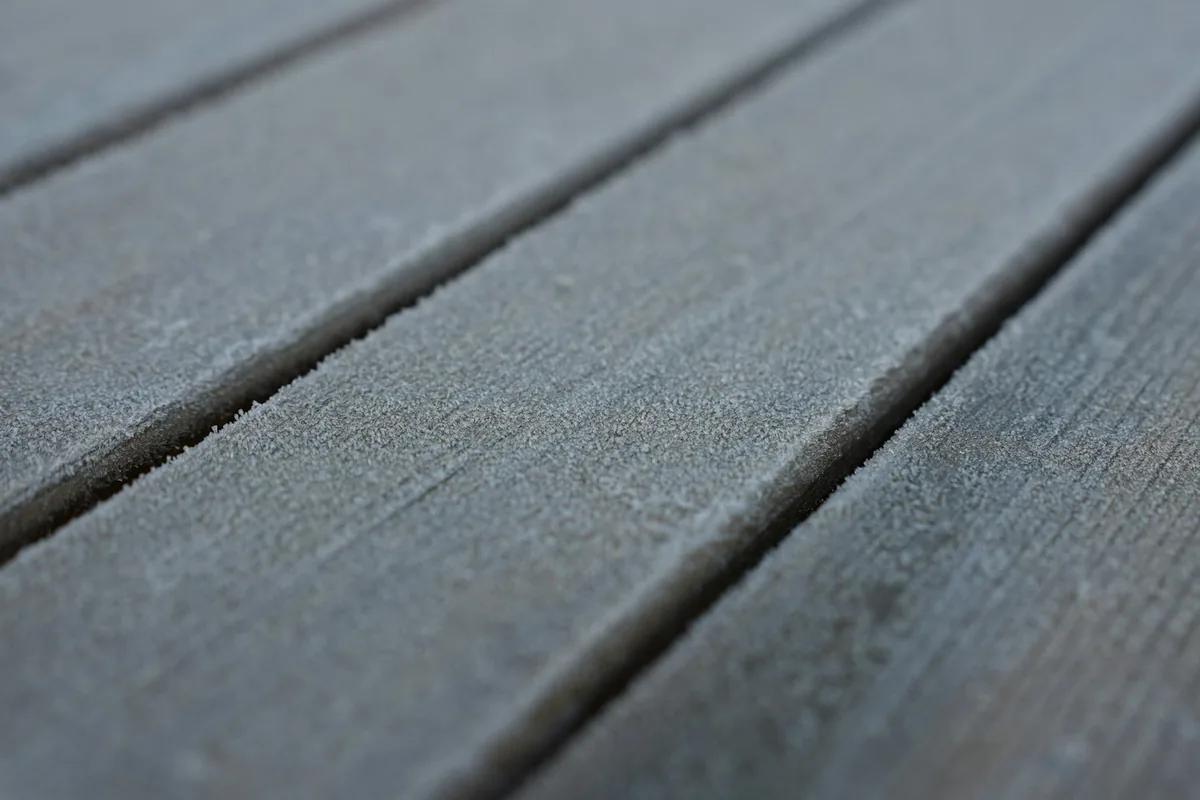
Frost on dark deck boards
Frost on dark deck boards on a cold morning.
Is composite or wood better for a deck in Colorado?

Composite for low upkeep, wood for low cost. Capped composite doesn't need the sealing every year or two that wood needs in Colorado's dry, high-altitude sun, and Trex backs it with 25 to 50 year limited warranties. Wood boards cost roughly half as much: $3 to $9 per square foot against $6 to $13 for composite (Modernize, 2026).

What is the best composite decking for Colorado?

A capped board in a light or mid color from a line with a long fade warranty and a fire rating that fits your address. Lighter colors stay cooler in the sun, capped boards resist fading and staining, and in unincorporated Larimer County the deck surface on covered construction must be Class B or better for composite. Trex Select, Transcend and Transcend Lineage are Class B rated, per Trex.

Does composite decking get hot in Colorado?

Yes, in direct summer sun. Trex states its decking gets hot on hot, sunny days and that darker colors get hotter; some of its lines add heat-reducing technology. Shade from a pergola or cover, or a lighter color, makes the biggest difference on a west-facing Fort Collins deck.

Does hail damage composite decking?

Large hail can mark any deck surface, and none of the major makers sell a board as hail-proof. Colorado ranks second in the nation for hail claims, and weathered wood that has dried out splits and splinters more easily, one more reason to keep a wood deck sealed. Check how a homeowners policy treats the deck before a storm, not after.

Can you put salt on a composite deck?

Trex says calcium chloride or rock salt can be used to melt ice and snow on its decking, rinsed off when the weather makes that practical, and that only plastic shovels should be used, because metal can chip the surface and void the warranty.

How long does a wood deck last compared with composite?

A wood deck's life depends on sealing and on the frame under it; in Colorado's dry sun, unsealed boards check and split within a few seasons. Composite boards carry limited residential warranties of 25 years (Trex Enhance), 35 (Select) and 50 (Transcend and Signature). The frame under both is treated lumber either way.

Still deciding?

Send the deck size and the address; quotes can price both. The quote is free.

Get a Free Quote