Deck repair in Fort Collins CO, from boards to footings
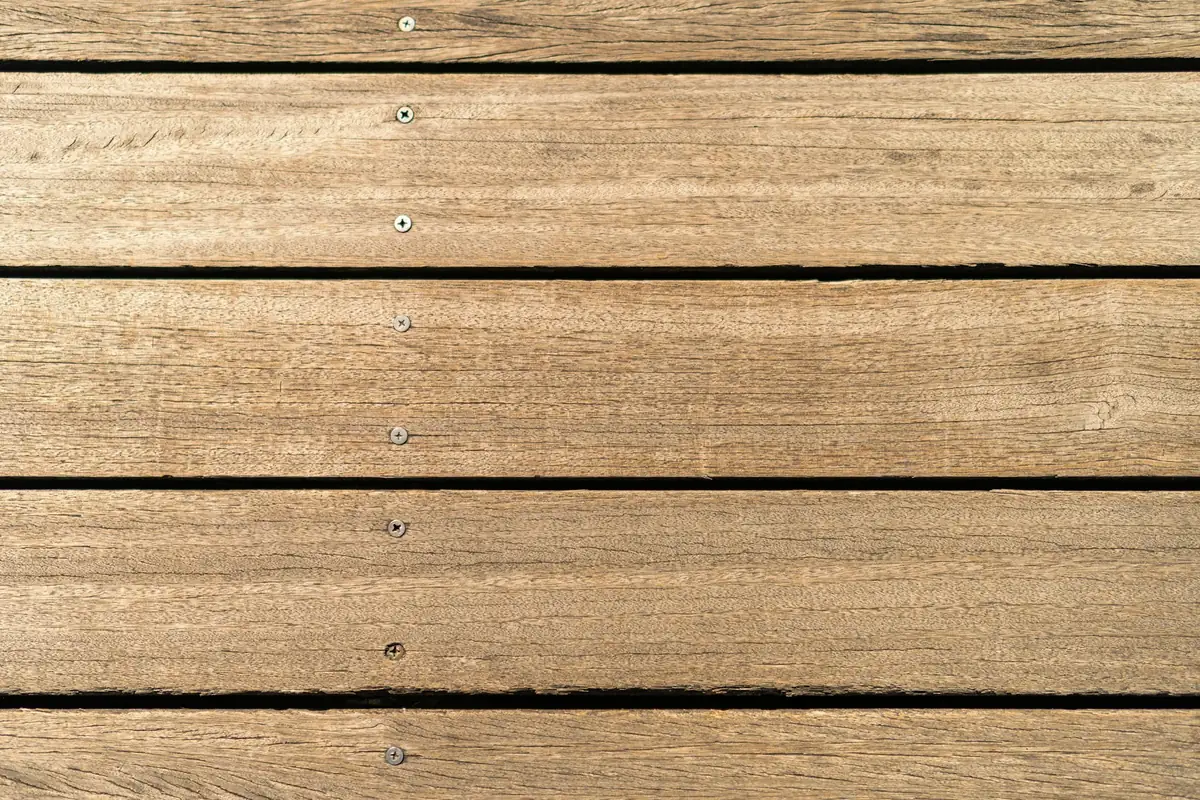
Many Fort Collins decks that need work are pressure-treated pine from a few decades back, and they fail in a predictable order. The boards go first: they cup, split and gray in the sun at 5,000 feet, and screws work loose as the wood shrinks in dry winter air. Then the tops of the joists rot where water sits under the boards. Last, and most serious, the ledger rots behind missing flashing or the posts settle on footings that were never deep enough.
Repair matches the problem. Boards are replaced in the same size and, where possible, the same species so the deck doesn't look patched. Framing repairs follow the 2024 International Residential Code that Fort Collins adopted on April 1, 2026, which is also why some repairs now need a permit that the original deck may never have had.
Signs a deck needs repair
- Boards that flex or feel spongy underfoot, or screws standing proud of the surface.
- A railing post that moves more than a little when you lean on it.
- Stairs that bounce, lean, or have treads splitting at the screws.
- A gap opening between the deck and the house, or stains on the siding under the ledger.
- Posts that have sunk, leaving the deck out of level, or wood that is soft at the base of a post.
- Joist hangers or post bases rusted through, common on treated lumber with the wrong fasteners.

What repairs need a Fort Collins permit
Replacing structure needs a permit; replacing surface does not. The City's Residential Deck Guide (revised June 24, 2026) lists the repair items: joists, posts, beams or stairs; the guard railing; and decking boards when the new boards are heavier than the old ones. That last item catches people switching from pine to composite or hardwood. The permit is $110 plus sales tax, and inspections follow the same order as a new deck: footings in the open hole, post connections, rough framing before boards go on, then a final.
The full list of triggers, what the plans have to show and when an engineer is needed are in the Fort Collins deck permit guide. Railing height and baluster spacing are in the railing and stair code guide. City text: Fort Collins building permits.
Repair prices in the Denver market
| Repair | Typical cost | What drives it |
|---|---|---|
| Deck repair overall | $746 to $3,060 | Average $1,891; size, material and how much framing is involved |
| Repair labor | From $15 per sq ft | Or $50 to $100 an hour |
| Repair materials | $3 to $45 per sq ft | Pressure-treated at the low end, composite and hardwood high |
| Cedar boards | $3 to $7 per sq ft | Material for board replacement |
| Railing replacement | $950 to $1,850 | Length, material and post re-anchoring |
| Fort Collins permit, structural repair | $110 plus tax | Joists, posts, beams, stairs or guards |
Sources: Angi, How Much Does Deck Repair Cost in Denver, CO? (2026); City of Fort Collins building permit fees. Quotes vary by site.
If the repair list is long, compare it with a rebuild: the deck replacement in Fort Collins page has the numbers.
How a deck repair goes
- 1Probe and map the damage
Every board, joist end, post base and the ledger gets checked with a screwdriver and a level. The map decides whether this is a repair or a rebuild.
- 2Check whether it's permitted work
Joists, posts, beams, stairs and guards are permit items in Fort Collins. Those repairs go through the City before any framing is touched.
- 3Shore and open up
The deck is supported with temporary posts where needed, then the bad boards come up so the framing can be seen and inspected.
- 4Rebuild the structure
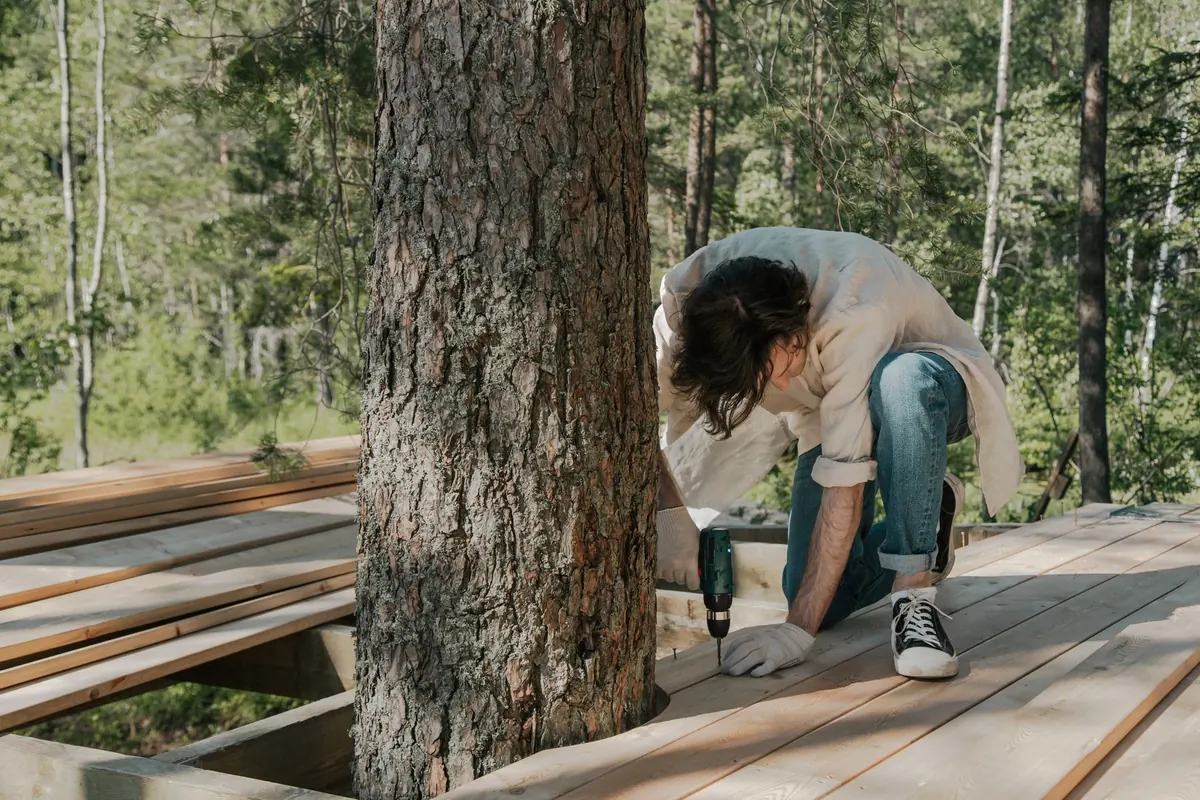
Joists are sistered or replaced, posts reset on footings 30 inches deep with post bases, and the ledger rebuilt with bolts and flashing. Fasteners rated for treated lumber go in throughout.
- 5Close up and finish
New boards are matched as closely as the material allows, railings are re-anchored to the framing, and wood is sealed once it has dried.
Board, joist, post and ledger repairs explained
Boards
Split or soft boards are pulled and replaced. On an older wood deck the new board won't match the gray of the old ones until it weathers or the whole deck is cleaned and sealed. Moving the whole surface to composite decking is possible when the joists are sound and spaced for it, and it counts as heavier decking under the City rule.
Joists and beams
A joist with rot at one end is cut back to sound wood and sistered: a new treated joist bolted full length beside it. Joists rotted along the top get joist tape on the new work so water doesn't sit in the grain again. A sagging beam usually means a post or footing problem underneath.
Posts and footings
Sunken posts are the classic Front Range repair. The deck is shored, the old footing dug out, and a new pier poured at least 30 inches below grade for an attached deck, sized to the area that post carries; the footing depth guide has the diameters.
Ledger
The ledger is the board bolted to the house. If it was nailed on, or the flashing above it failed, it comes off, the house rim is checked for rot, and a new ledger goes on with code fasteners and flashing. It is the single most important repair on an attached deck.
Repair now, plan the rest
Many repairs are a good moment to decide what's next: sealing a cedar deck, a new railing, or a cover. The deck builder in Fort Collins page lists every service.