Pineridge Deck Pros
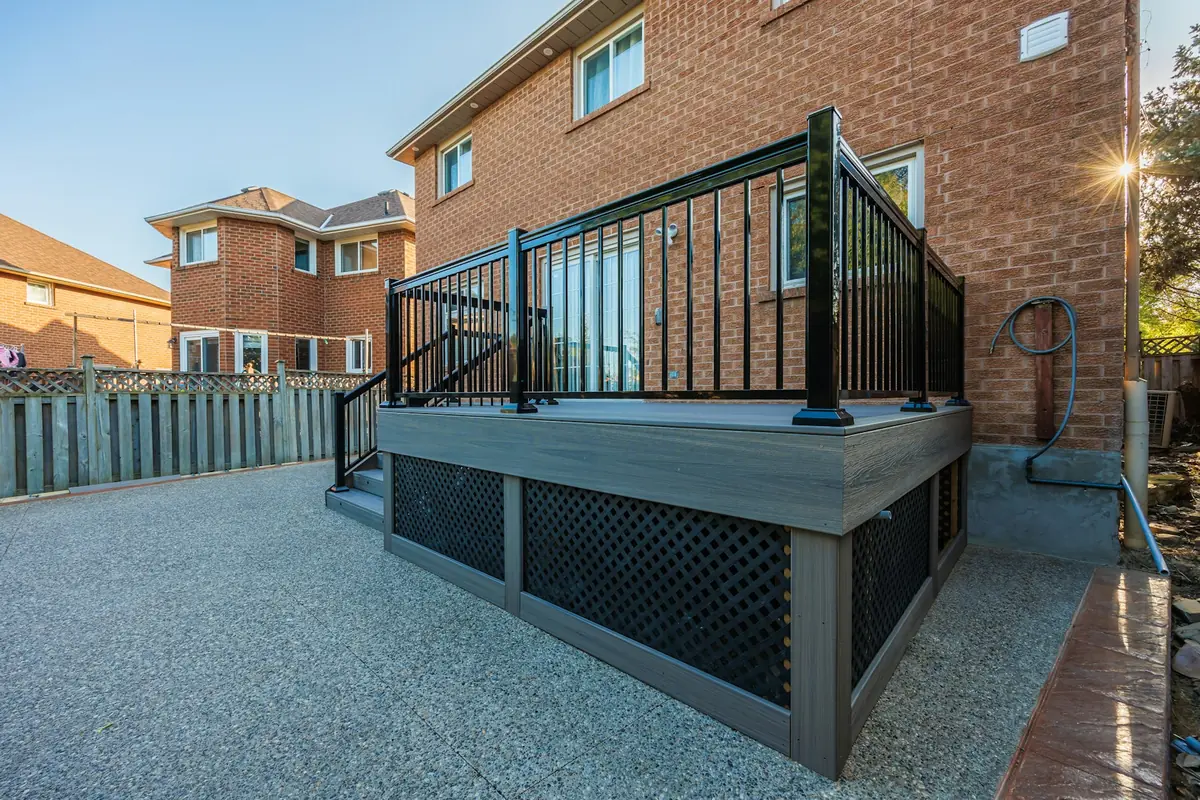
Raised gray composite deck with black aluminum railings and lattice skirting behind a brick house

Fort Collins, CO Deck railing

Deck Railing Installation in Fort Collins CO

Deck railing installation in Fort Collins CO costs about $15 to $50 a foot for wood and $15 to $60 for composite, and aluminum runs about $40 to $70 (Angi, 2026, national). Pineridge Deck Pros installs new and replacement railings in aluminum, composite, wood and glass, with posts tied into the deck framing the way the City now inspects them.

$15 to $60 per foot
Wood and composite railing installation, national (Angi, 2026).
30 inches
Deck height above grade, measured 3 ft out, where Fort Collins requires a guard.
Under 4 inches
Maximum opening in a deck guard; 4-3/8 inches on stairs.

Deck railing installation in Fort Collins CO

A railing is the part of a deck people lean on, and the part that most often fails quietly. On older Northern Colorado decks the posts were often lagged to the outside of the rim joist, and years of dry winters shrink the wood until the posts tilt. New railings go on to the 2024 International Residential Code that Fort Collins adopted in April 2026, which spells out how guard posts connect to the framing.

Most people already have a look in mind, whether aluminum, metal, wood, Trex or a porch-style rail. The choice mostly comes down to upkeep, view and budget.

Railing materials

Aluminum is powder-coated, light and needs no finishing; black aluminum with round or square balusters is the common Front Range look. Composite railing pairs with composite decking and comes in matching colors. Wood costs the least and suits a cedar or treated deck, but needs sealing on the same schedule as the boards. Glass panels keep the view but show dust and need wiping. Cable keeps the view with less upkeep than glass and has its own cable railing page.
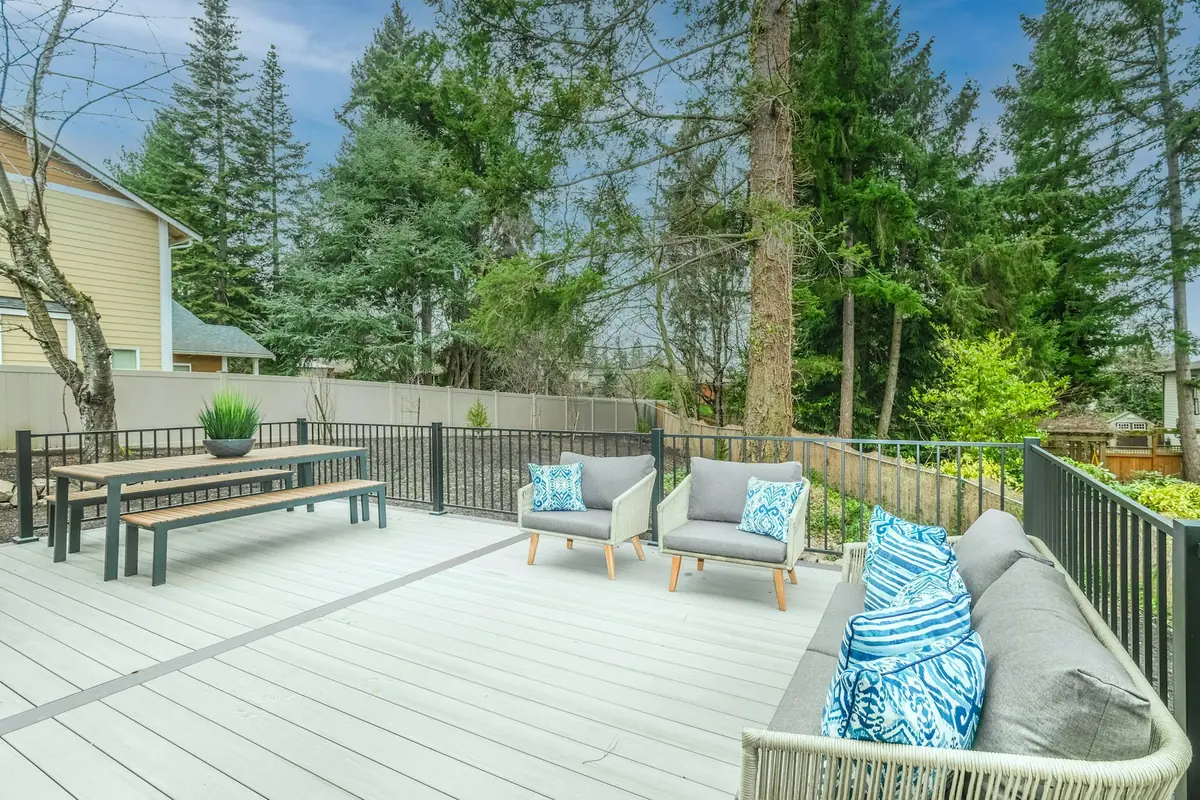
Light gray composite deck with black metal railings, an outdoor table and lounge chairs among tall trees
A light gray composite deck with black metal railings.

Railing rules in Fort Collins

Guards are required wherever the walking surface is 30 inches or more above grade, measured at a point 3 feet out from the deck edge, and the openings must be under 4 inches (4-3/8 inches on stairs). Top-mounted posts connect to joists, beams or blocking; side-mounted posts connect to the adjacent joist so they can't rotate, with no fasteners in end grain. Stairs with 4 or more risers need a graspable handrail on at least one side. Replacing the guard railing is permit work.

The whole set, with stairs and landings, is in the deck railing and stair code guide, and the permit itself in the Fort Collins deck permit guide. The source is the City's Residential Deck Guide.

Deck railing prices

Deck railing costs per linear foot (2026)
RailingPer linear footNote
Wood$15 to $50Installed, national (Angi); needs sealing like the deck
Composite or Trex$15 to $60Installed, national (Angi); matches composite decking
Aluminum$40 to $70Replacement, national (Angi); powder-coated
Cable, wood posts$75 to $95HomeGuide
Cable, aluminum or stainless$150 to $285HomeGuide
Railing replacement, Denver$950 to $1,850Typical job (Angi Denver)

Sources: Angi 2026 deck railing installation and railing replacement guides (national) and Denver deck repair guide; HomeGuide cable railing guide. Quotes vary by site.
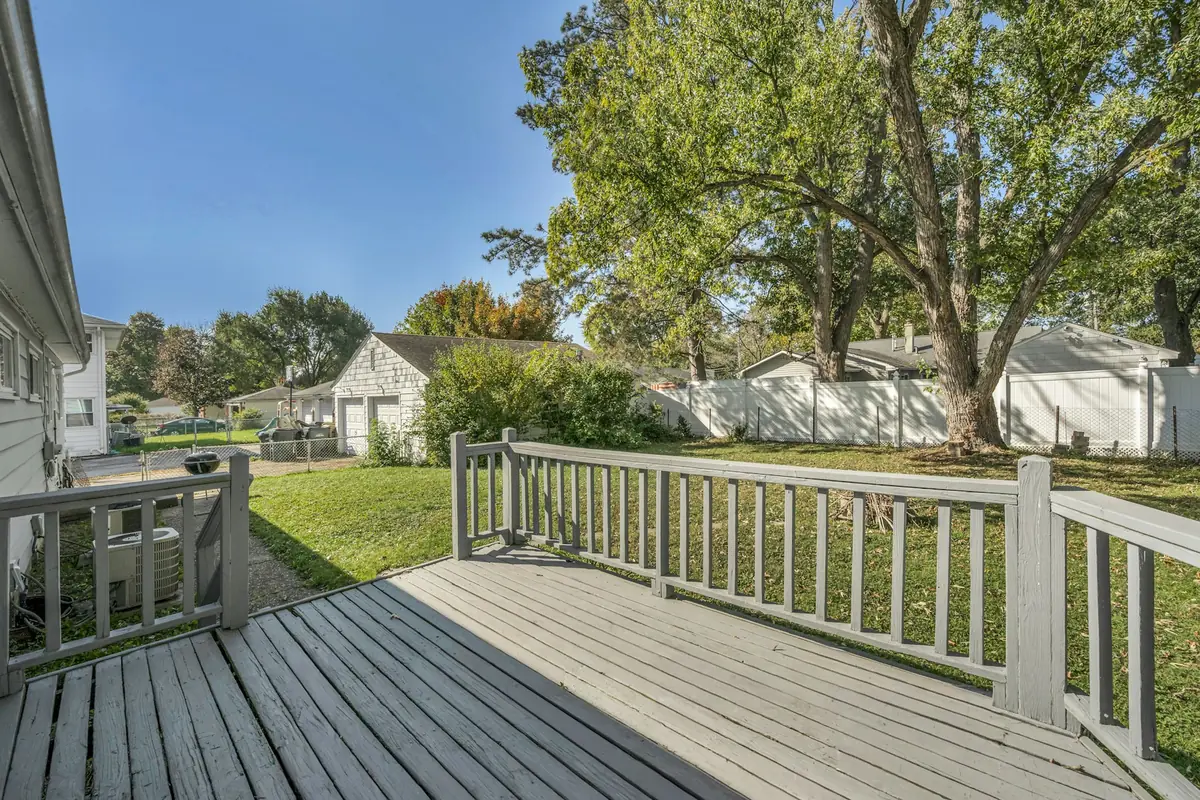
Gray painted wood deck railing looking out over a fenced backyard and trees
A painted wood railing with square balusters.

How a railing goes on

  1. 1
    Measure and choose

    Lineal footage of guard and stair rail, post spacing, and the material: aluminum, composite, wood, glass or cable.

  2. 2
    Permit the guard

    New or replacement guards are permit work in Fort Collins. The plans show the post attachment detail.

  3. 3
    Set the posts

    Posts are through-bolted or blocked into the framing so they resist a push outward, top-mounted to joists, beams or blocking, or side-mounted with a connection to the next joist.

  4. 4
    Rails and infill

    Top and bottom rails go on, then balusters, panels or glass, checked so a 4 inch sphere can't pass.

  5. 5
    Stair rail and handrail

    Stairs with 4 or more risers get a graspable handrail; stair guards stay under 4-3/8 inch openings.
Get a Free Quote

Tell us the job and where it is. There is no charge for a quote.

Deck Railing Installation in Fort Collins: Questions

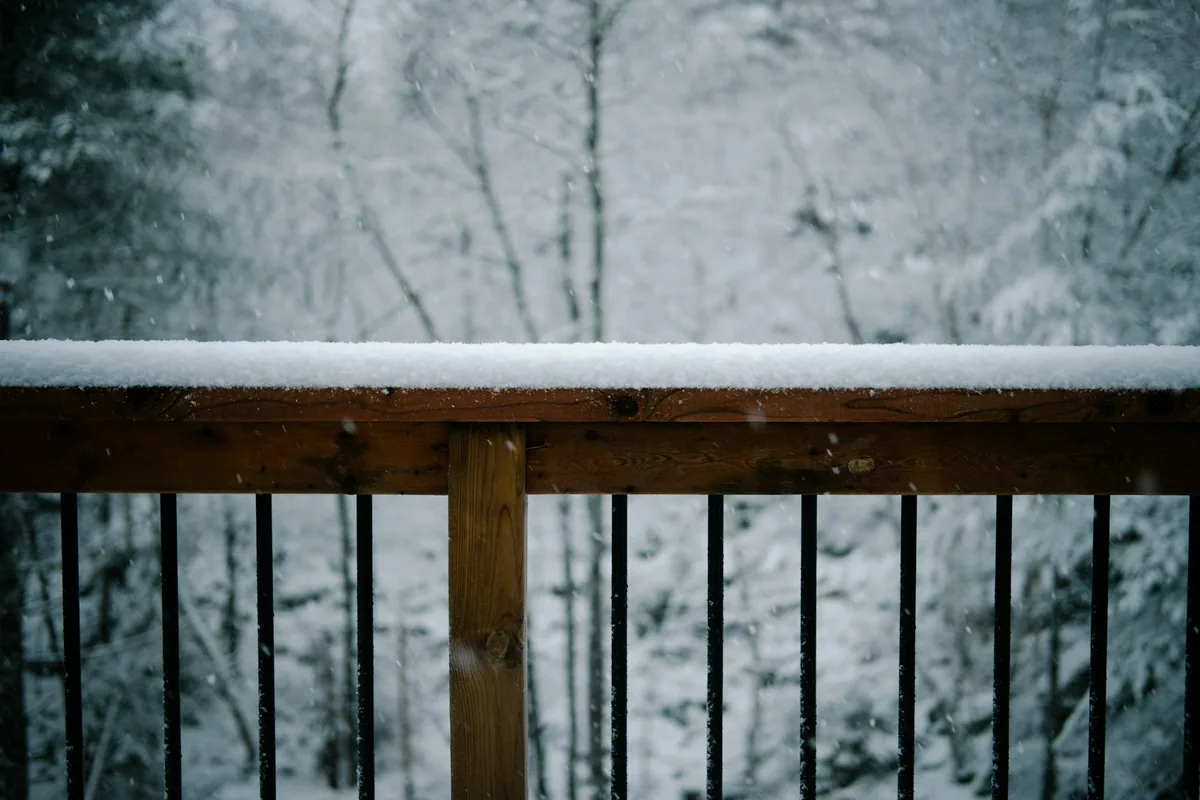
Snow on the top rail of a deck railing with black metal balusters
Snow on the cap rail of a deck with black metal balusters.
How much does deck railing cost per foot?

Angi's 2026 national figures put deck railing installation at $10 to $50 per linear foot on average: $15 to $50 for wood and $15 to $60 for composite or Trex. Angi's railing replacement guide lists aluminum at $40 to $70 a foot. In the Denver market a typical railing replacement runs $950 to $1,850. Cable railing is its own category, roughly $75 to $285 a foot depending on the posts.

Does replacing a deck railing need a permit in Fort Collins?

Yes. The Fort Collins Residential Deck Guide lists replacing the guard railing as work that needs a permit, the same as replacing joists, posts or stairs. The permit is $110 plus sales tax, and the inspector checks how the new posts attach to the framing.

How high does a deck railing have to be?

A guard is required where the deck is 30 inches or more above grade, which Fort Collins measures at a point 3 feet out from the deck edge. Larimer County's deck handout sets the guard height at 36 inches minimum, with openings small enough that a 4 inch sphere can't pass, including under the bottom rail. Stair guards allow up to 4-3/8 inch openings in Fort Collins.

What is the best deck railing for Colorado?

Powder-coated aluminum is the low-maintenance favorite: it doesn't need sealing in the dry, high-altitude sun and won't split. Composite railing matches composite decks. Wood is cheapest but needs the same sealing schedule as a wood deck. Cable and glass keep the view and cost the most.

Why do deck railings get loose?

Usually the post attachment. A post screwed or nailed to the outside of a rim joist can rotate outward as the wood dries and shrinks. Code now wants guard posts tied to the joists, beams or blocking, with side-mounted posts connected to the adjacent joist so they can't rotate, and no fasteners driven into end grain.

Railing loose, or just tired-looking?

Send the length of railing, the deck's height and the address. The quote is free.

Get a Free Quote